

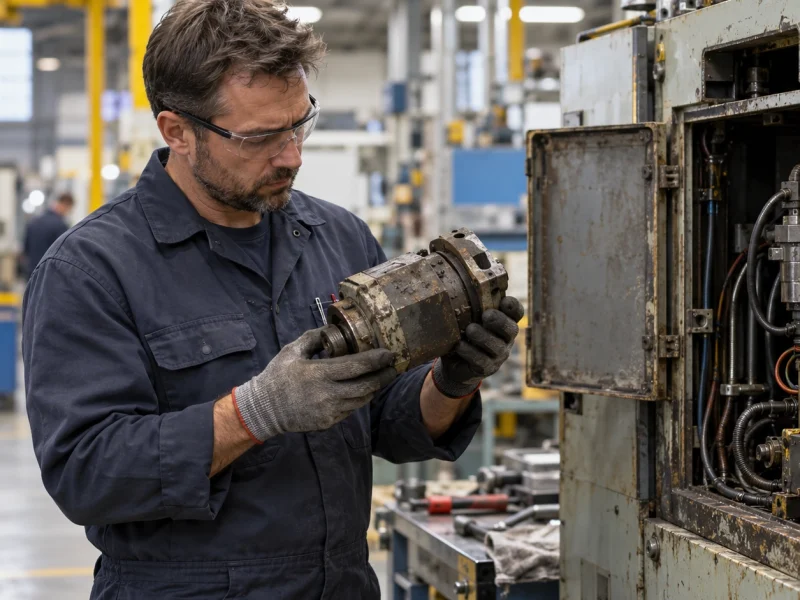
Your machine still works. Your production line still works. But one worn, cracked or damaged component needs to be replaced, and the original equipment manufacturer tells you: “That part has been discontinued.”
For maintenance teams, plant managers, engineers and purchasing departments, an obsolete OEM part can quickly become more than a sourcing problem. If the component is critical to the operation of the equipment, it can create downtime, force temporary repairs or even lead to discussions about replacing an otherwise serviceable machine.
Before replacing the equipment, there may be another option: Recreate the part.
Depending on the component and application, an obsolete or hard-to-source part may be reverse engineered, 3D printed, CNC machined or redesigned using an engineered plastic that meets the requirements of the application.
Can an Obsolete Machine Part Be Recreated?
Yes. In many situations, a discontinued industrial component can be recreated even when the original OEM no longer supplies it.
The starting point may be:
- The existing part
- A worn or damaged part
- An original drawing
- A CAD file
- Measurements or specifications
- Equipment documentation
- A combination of these
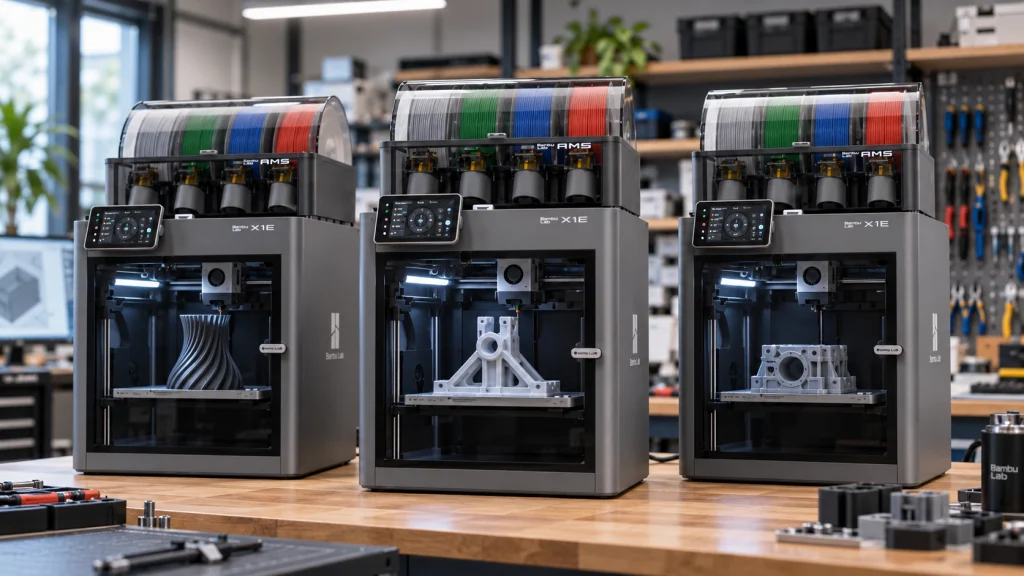
Konrady Plastics can print directly from customer CAD files and can also reverse engineer existing components as part of its in-house 3D printing capabilities. The company also provides CNC plastic machining from prototype through production.
That means the conversation does not necessarily have to begin with a perfect print. Sometimes it begins with: “This is the part we have. Can you help us replace it?”
Do You Need the Original Drawing to Reproduce a Part?
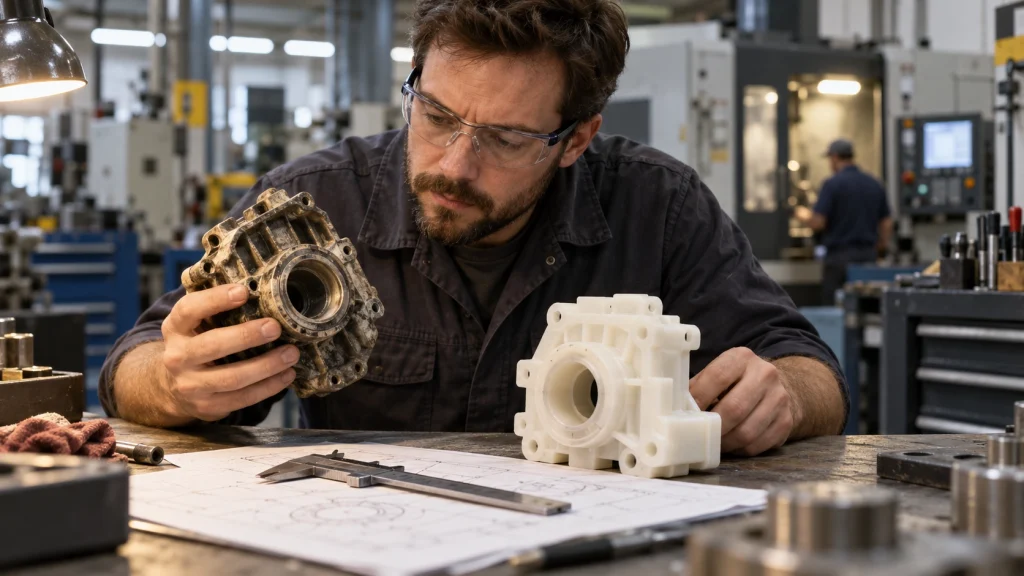
Not always. An original drawing or CAD model is extremely helpful, particularly when dimensions, tolerances and material specifications are known. But when those files no longer exist, an existing component may provide another starting point.
A replacement project can involve evaluating the original part’s:
- Overall dimensions
- Critical dimensions and tolerances
- Mounting locations
- Holes, slots and mating surfaces
- Wear patterns
- Operating environment
- Loads
- Temperature
- Moisture exposure
- Chemicals
- Friction and abrasion
- Material
This is where it becomes important to understand what the component does, not simply what it looks like. A replacement should reproduce the functional requirements of the original part, not blindly reproduce years of wear or damage.
Should the Replacement Part Be Made From the Same Material?
Not necessarily. An obsolete part creates an opportunity to ask a question that may not have been considered when the equipment was originally designed: Is the original material still the best material for the application?
Some industrial components traditionally made from metal can potentially be replaced with properly selected engineered plastics.
Depending on the application, engineered plastics may provide advantages such as:
- Corrosion resistance
- Lower weight
- Reduced friction
- Wear resistance
- Reduced lubrication requirements
- Noise reduction
- Chemical resistance
- Electrical insulation
- Easier handling
- Reduced wear on mating components
Components commonly produced from engineered plastics include bearings, bushings, guides, wear pads, rollers, liners, pulleys, sheaves, sprockets, cams and other machine components.
The goal should not be to replace metal simply because plastic is available. The goal is to determine which material will provide the best performance for that particular application.
CNC Machining or 3D Printing: Which Is Better for an Obsolete Part?
There is no universal answer. Both technologies can play useful roles in replacement-part manufacturing.
3D printing may make sense when:
- A prototype is needed quickly
- The design needs to be tested before final production
- Only one or a small number of parts are required
- The geometry is difficult to manufacture conventionally
- Tooling costs would make a small run impractical
- A temporary or functional replacement is appropriate for the application
The National Institute of Standards and Technology identifies end-of-life and repair parts as an important additive manufacturing opportunity. NIST notes that additive manufacturing can improve the economics of low-volume replacement parts because manufacturers can avoid maintaining tooling and large inventories for older components.
CNC plastic machining may make sense when:
- Tight tolerances are required
- A specific engineering-grade material is needed
- Surface finish is important
- Dimensional stability is critical
- The component will operate under demanding loads
- Production quantities justify machining
- The application requires properties that are better achieved with machined stock shapes
In some cases, both processes can be used.
A 3D printed prototype can help confirm fit and geometry before the final component is machined from the appropriate engineered plastic. Konrady Plastics provides both in-house 3D printing and CNC plastic machining, allowing the manufacturing approach to be selected around the part rather than forcing every project into the same process.
What Information Should You Gather Before Replacing an Obsolete Part?
If you are trying to source a discontinued industrial component, start by gathering whatever information is available.
1. The existing part
Even a worn component can help establish geometry and mounting requirements.
2. Drawings or manuals
Old equipment manuals, service documentation and drawings may contain useful dimensions, materials or part numbers.
3. Photos of the part in the machine
Understanding where and how the component operates can provide important context.
4. The operating conditions
Be prepared to describe:
- Load
- Speed
- Temperature
- Moisture
- Chemicals
- Abrasion
- Impact
- Friction
- Food contact or regulatory requirements
- Expected service life
5. Why the original part failed
Was it worn?
Cracked?
Corroded?
Swollen?
Deformed?
Did it create excessive friction?
Did it repeatedly require lubrication?
Understanding the failure can reveal whether duplicating the original material is actually the best solution.
What Types of Obsolete Parts Can Be Recreated From Engineered Plastics?
The specific application determines what is possible, but common industrial candidates can include:
- Bushings
- Bearings
- Wear pads
- Guide blocks
- Conveyor guides
- Rollers
- Pulleys
- Sheaves
- Sprockets
- Cams
- Liners
- Spacers
- Scrapers
- Wipers
- Machine guards
- Feed components
- Timing components
- Chute components
- Specialty machine parts
Konrady Plastics machines engineered plastic components for industries including material handling, food and beverage, transportation, agriculture, wastewater, pharmaceutical, construction and heavy equipment.
What Engineered Plastics Are Used for Replacement Parts?
There is no single “replacement-part plastic.” Material selection depends on what the component needs to do.
Common engineered plastics include:
UHMW-PE
Often considered for wear, sliding, guide and low-friction applications.
Nylon
Frequently used for bearings, bushings, rollers, pulleys and load-bearing components.
Acetal
Often considered where machinability, dimensional stability and tighter tolerances are important.
PTFE
Known for low friction and chemical resistance.
HDPE
Used in a variety of chemical, moisture and general industrial applications.
Polycarbonate and acrylic
Commonly considered for guards, windows, sight components and transparent machine parts.
PEEK and other high-performance materials
Used when more demanding combinations of temperature, chemical resistance or mechanical performance are required.
The correct choice depends on the actual operating environment.
Don’t Wait Until the Last Spare Is Gone
There is another lesson hidden inside the obsolete-parts problem. If a machine relies on a difficult-to-source component and you currently have one spare left on the shelf, that is the ideal time to evaluate replacement options.
Reliability-centered maintenance focuses on understanding equipment condition and addressing risks before a failure occurs rather than relying entirely on reactive repair.
Having a replacement-part strategy before a critical component fails can help reduce emergency sourcing, expedited freight and unplanned downtime.
FAQ: Replacing Obsolete Industrial Parts
What do I do if the OEM no longer makes my replacement part?
Start by gathering the existing component, drawings, photographs, equipment information and operating requirements. A custom manufacturer may be able to reverse engineer or reproduce the component using CNC machining, 3D printing or another manufacturing process.
Can a machine part be reproduced without a drawing?
Potentially. An existing component may provide enough information to begin evaluating geometry, dimensions and function. Additional information about the operating environment and critical tolerances may still be required.
Can an obsolete metal part be replaced with plastic?
Sometimes. Engineered plastics can provide advantages such as corrosion resistance, lower weight, low friction and wear resistance, but the loads, temperatures, chemicals, dimensions and operating environment must be evaluated before changing materials.
Is CNC machining or 3D printing better for replacement parts?
It depends on the application. 3D printing can be useful for rapid prototypes, low-volume parts and design validation. CNC machining may be preferred for tighter tolerances, specific engineered materials and demanding production components.
Can you make only one replacement part?
Some replacement parts can be economically produced in very small quantities, particularly when additive manufacturing eliminates the need for tooling. Machined components may also be produced as prototypes or short runs depending on the part.
The OEM Says It’s Obsolete. That Doesn’t Always Mean the Machine Is.
A discontinued component does not automatically mean an otherwise productive piece of equipment has reached the end of its useful life.
Modern reverse engineering, 3D printing and CNC machining can provide another path for certain obsolete, discontinued and hard-to-source industrial parts.
Konrady Plastics combines more than 45 years of plastics experience with an in-house plastic machine shop, engineered plastic material distribution and 3D printing capabilities.
Have an obsolete part creating a problem? Send it our way. Request a Quote