

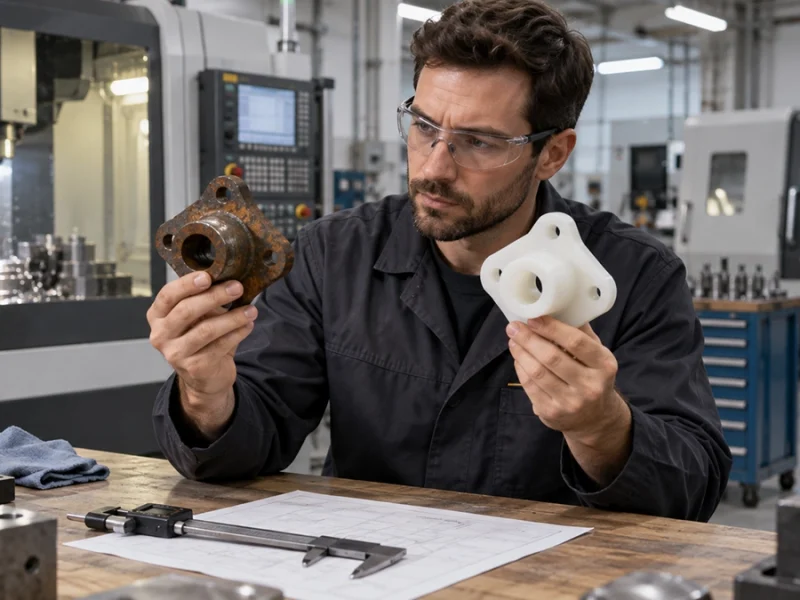
For decades, metal has been the default material for industrial components. Steel, aluminum, stainless steel and other metals are familiar, strong and proven. But that does not mean every component that has traditionally been made from metal still needs to be.
Advances in engineered plastics, also called performance plastics, give manufacturers, engineers and maintenance teams more options than ever when designing new equipment or replacing worn components. In the right application, replacing a metal part with an engineered plastic component can reduce weight, eliminate corrosion, lower friction, reduce noise, minimize lubrication requirements and potentially extend component life.
The key phrase is in the right application.
Changing materials should never be based simply on whether plastic is lighter or less expensive. Material selection should consider the entire operating environment, including load, temperature, wear, chemicals, moisture, tolerances, friction and expected service life.
So, when should you consider replacing a metal part with engineered plastic?
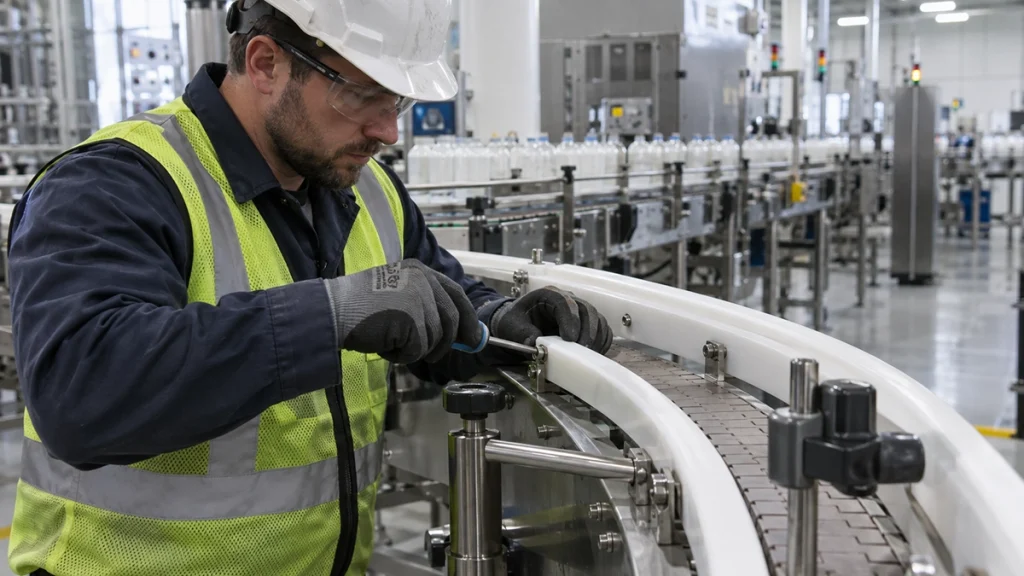
Why Replace Metal Parts With Engineered Plastics?
Metal-to-plastic conversion can solve several common manufacturing and maintenance challenges. Engineered plastics can provide properties that are difficult to achieve with conventional metals, particularly in applications involving friction, wear, corrosion, chemicals, moisture or weight.
Depending on the material and operating conditions, potential benefits include:
- Lower component weight
- Corrosion resistance
- Chemical resistance
- Low friction
- Excellent wear resistance
- Reduced lubrication requirements
- Noise and vibration reduction
- Electrical insulation
- Easier handling and installation
- Reduced wear on mating components
- Design flexibility
That combination makes engineered plastics worth evaluating for components such as bearings, bushings, wear pads, rollers, guides, liners, sprockets, pulleys, seals, slide plates, conveyor components and machine parts.
1. The Metal Part Keeps Corroding
Corrosion is one of the clearest reasons to consider an engineered plastic replacement. Metal components exposed to water, chemicals, washdowns, outdoor conditions or corrosive processing environments may require coatings, treatments, frequent maintenance or eventual replacement. Many engineered plastics inherently resist corrosion. That can make materials such as UHMW, HDPE, polypropylene, acetal, PTFE, PVDF and PEEK worth evaluating in applications involving:
- Food and beverage processing
- Wastewater treatment
- Chemical processing
- Agriculture
- Material handling
- Outdoor equipment
- Heavy equipment
- Transportation
Instead of continually protecting the component from corrosion, it may be possible to select a material that does not corrode in the first place. The specific chemical environment still matters. Different plastics have different chemical resistance characteristics, so compatibility should always be evaluated before changing materials.
2. Weight Is Becoming a Problem
Engineered plastics generally weigh substantially less than metals. That difference can matter more than it initially appears. A lighter component can be easier for employees to lift, install, remove and replace. Reducing the weight of moving parts may also decrease inertia and loads elsewhere within equipment.
In transportation applications, lightweight components can contribute to lower overall vehicle weight. For equipment that requires frequent changeovers, maintenance or manual handling, simply making a component easier to handle can provide a practical operational benefit.
The question becomes:
Does this component require the density of metal to do its job?
If the answer is no, an engineered plastic may be worth considering.
3. Friction and Wear Are Causing Maintenance Problems
A metal component rubbing against another metal surface can create friction, noise, heat and wear. Certain engineered plastics are specifically suited for low-friction and wear applications. Depending on the application, they can be used for components such as:
- Bushings
- Bearings
- Wear strips
- Guides
- Rollers
- Slide pads
- Chain guides
- Pulleys
- Sprockets
- Wear plates
UHMW, nylon, acetal and PTFE are among the materials frequently evaluated for applications where friction and wear are important considerations. Using a properly selected engineered plastic can also help protect the mating component. In other words, instead of having two hard surfaces wearing against each other, the plastic component can sometimes function as the intentional wear component that is easier to replace.
4. The Part Requires Too Much Lubrication
Lubrication is necessary in many mechanical systems, but it also creates maintenance requirements. Lubricants must be applied, monitored and replaced, and in some applications contamination must be carefully controlled. Certain engineered plastics offer low-friction or self-lubricating characteristics that may reduce or, in appropriate applications, eliminate the need for external lubrication. That can be particularly valuable in:
- Food processing machinery
- Conveyor systems
- Packaging equipment
- Material handling systems
- Difficult-to-access equipment
- High-maintenance wear applications
Reducing lubrication requirements can simplify maintenance while also helping keep equipment cleaner.
5. Noise Is an Issue
Anyone who has worked around industrial equipment knows how much noise can come from metal-on-metal contact. Replacing certain metal components with engineered plastics can help dampen vibration and reduce operating noise. Applications might include:
- Gears
- Rollers
- Guides
- Wear pads
- Bushings
- Conveyor components
- Material handling equipment
Noise reduction alone may not justify changing a component, but when combined with benefits such as lower friction, corrosion resistance or reduced weight, it can become another reason to evaluate a metal-to-plastic conversion.
6. You Are Replacing the Same Metal Part Again and Again
A frequently replaced component deserves investigation. Instead of automatically ordering another identical replacement, ask why the component is failing. Is it:
- Corroding?
- Wearing?
- Binding?
- Creating excessive friction?
- Damaging another component?
- Exposed to moisture?
- Reacting with chemicals?
- Difficult to lubricate?
The problem may not be the design. The problem may be the material.
A material change can sometimes extend service life without requiring a complete equipment redesign. This is particularly relevant for maintenance and MRO teams that have inherited older equipment where the original material was selected decades ago.
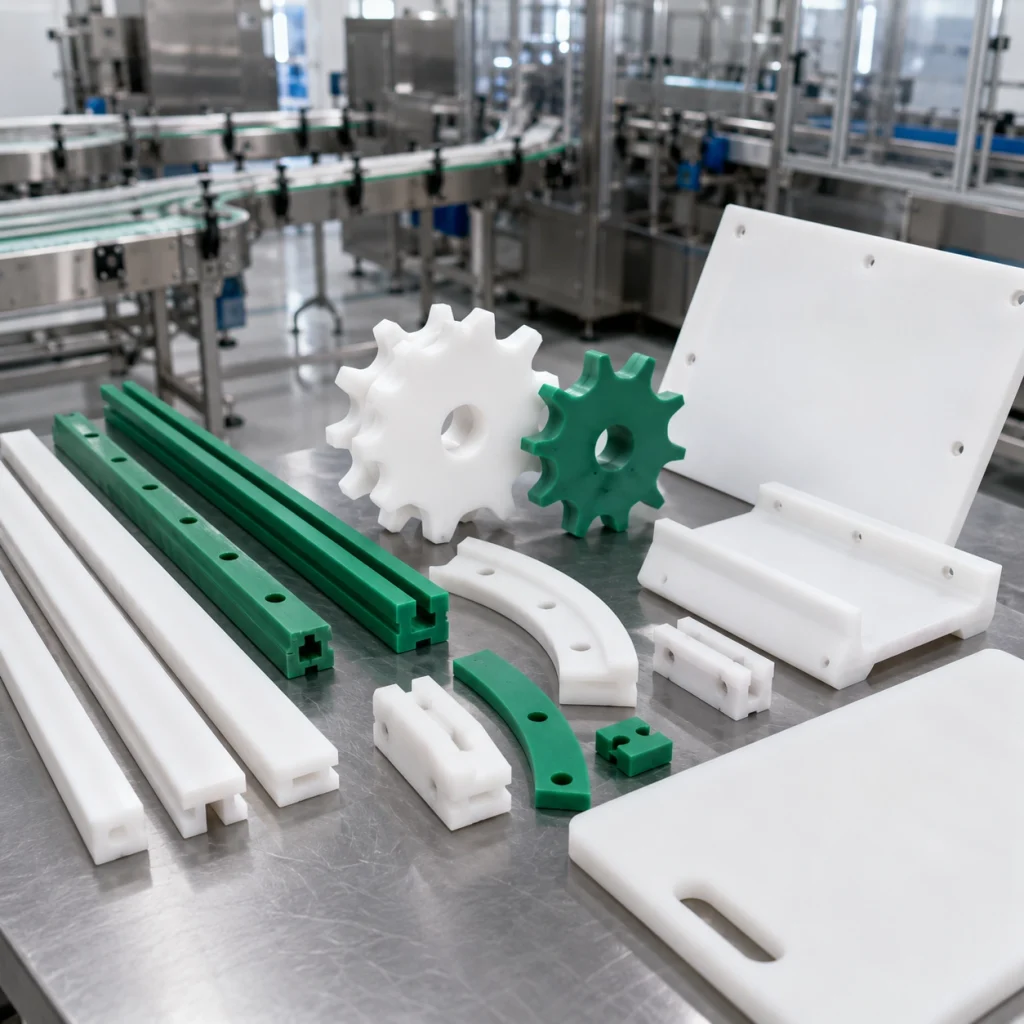
Which Engineered Plastic Can Replace Metal?
There is no single plastic that replaces metal. Different engineered plastics provide very different performance characteristics.
UHMW-PE
Ultra-high molecular weight polyethylene is commonly considered for applications requiring:
- Excellent wear resistance
- Low friction
- Impact resistance
- Moisture resistance
- Chemical resistance
Common applications include wear strips, guides, liners, conveyor components and wear pads.
Nylon
Nylon can offer an effective combination of strength, toughness and wear resistance. It is frequently considered for:
- Bearings
- Bushings
- Rollers
- Gears
- Pulleys
- Wear components
Moisture absorption must be considered because it can affect dimensions and material properties.
Acetal
Acetal, including materials commonly known by the Delrin® trade name, is often selected where dimensional stability and precision are important. Potential applications include:
- Precision components
- Gears
- Bushings
- Rollers
- Valves
- Mechanical components
It machines well and can be useful in applications requiring tighter tolerances.
PTFE
PTFE is well known for its extremely low friction and broad chemical resistance. It may be considered for:
- Seals
- Bearings
- Bushings
- Chemical-processing components
- Low-friction applications
Its mechanical characteristics differ significantly from materials such as nylon or acetal, so the complete application needs to be considered.
PEEK
PEEK is a high-performance engineering thermoplastic that may be considered for demanding applications involving combinations of:
- Elevated temperatures
- Mechanical performance
- Chemical resistance
- Wear
- Dimensional requirements
Its higher material cost means it is generally selected where its performance characteristics justify the investment.
Questions to Ask Before Replacing Metal With Plastic
Before converting a metal component to engineered plastic, gather as much information as possible about how the part actually operates. Important questions include:
What load does the part carry?
Both static and dynamic loads need to be considered.
What temperatures will it experience?
Consider continuous operating temperature as well as short-term temperature spikes.
Will chemicals contact the component?
Cleaning agents, lubricants, process chemicals and environmental exposure can all affect material selection.
Will the component be exposed to moisture?
Water absorption can significantly affect certain plastics.
How important are dimensional tolerances?
Some engineered plastics have better dimensional stability than others.
Is friction or wear important?
The mating surface, speed and pressure should all be considered.
Does the application require electrical insulation?
Many plastics offer inherent electrical insulation properties that metals cannot.
Are there regulatory requirements?
Food-contact, medical, flame-retardant, electrical or other requirements may significantly narrow the available materials.
What is causing the existing metal part to fail?
Understanding the failure mode is often the most useful place to begin.
When Should a Part Stay Metal?
Engineered plastics are not automatically better than metals. There are many situations where metal remains the appropriate choice. Extremely high structural loads, very high temperatures, certain dimensional requirements and other demanding conditions may favor metal.
Successful metal-to-plastic conversion requires comparing the materials against the actual operating conditions, not selecting a material based on a single property.
The objective should never be: How can we replace metal with plastic?
The better question is: Which material will perform best in this application?
Think Beyond the Purchase Price
Material selection should also look beyond the initial cost of the component. A component that costs less initially but requires frequent replacement may ultimately be more expensive. Consider the entire operating cost, including:
- Component life
- Maintenance labor
- Equipment downtime
- Lubrication
- Corrosion protection
- Installation
- Weight
- Replacement frequency
- Damage to mating components
A properly selected engineered plastic component may create value in places that do not appear on the original parts invoice.
Metal-to-Plastic Conversion Can Also Support Sustainability Goals
Longer component life can have benefits beyond maintenance costs. If an engineered plastic component lasts longer, resists corrosion or reduces maintenance, fewer replacement parts may be required during the life of the equipment. That can mean less material, machining, transportation, packaging, installation and disposal over time. Lightweighting and reduced lubrication can provide additional lifecycle advantages in the right applications.
For manufacturers evaluating sustainability, the goal should not simply be to compare raw materials. The entire service life of the component should be considered.
Talk to People Who Machine Plastics Every Day
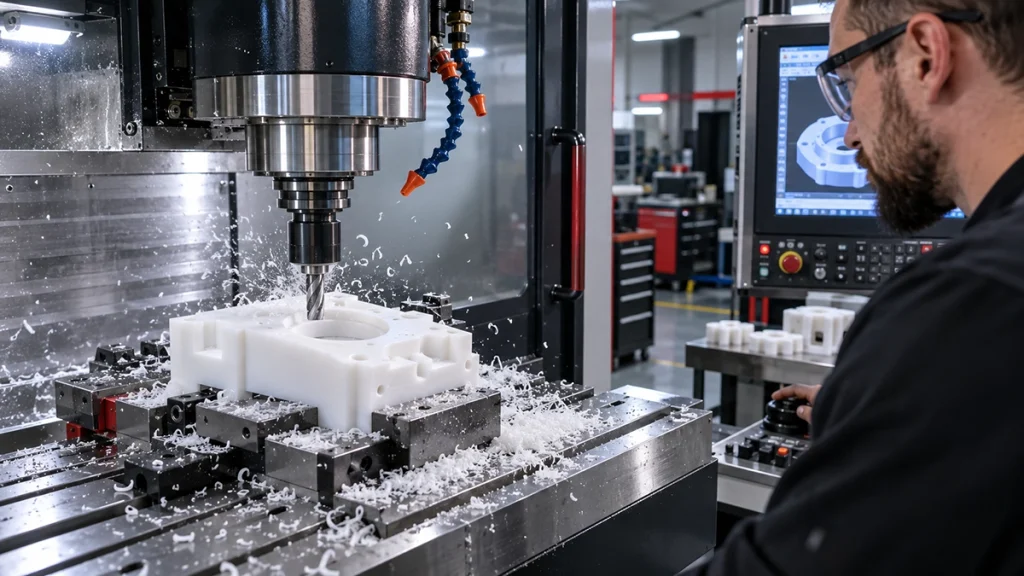
Metal machining and plastic machining are not identical. Plastics respond differently to heat, cutting forces, fixturing and dimensional changes during machining.
Konrady Plastics specializes in plastic products and combines an in-house CNC plastic machine shop with distribution of engineered plastic sheet, rod and tube. The company has worked with engineered plastics since 1981 and produces custom machined components from prototype through production for industries including food processing, material handling, transportation, agriculture, wastewater treatment, heavy equipment and manufacturing.
Having access to both material selection expertise and CNC plastic machining can be particularly useful when evaluating a metal-to-plastic conversion because the material choice and manufacturing process need to work together.
Should Your Part Still Be Metal?
If an existing metal component is corroding, wearing prematurely, creating friction, adding unnecessary weight, requiring frequent lubrication or repeatedly causing maintenance problems, it may be time to reconsider the material.
The answer will not always be plastic. But asking the question can uncover opportunities to improve equipment performance, simplify maintenance and extend component life. Before automatically replacing that worn metal component with another identical metal part, ask:
Should this part still be metal?
Konrady Plastics works with OEMs, engineers, manufacturers and maintenance teams to evaluate engineered plastic materials and manufacture custom CNC plastic parts for demanding industrial applications.
Contact us with a drawing, an existing component or the problem you are trying to solve, and let’s determine which material makes sense for the application.