

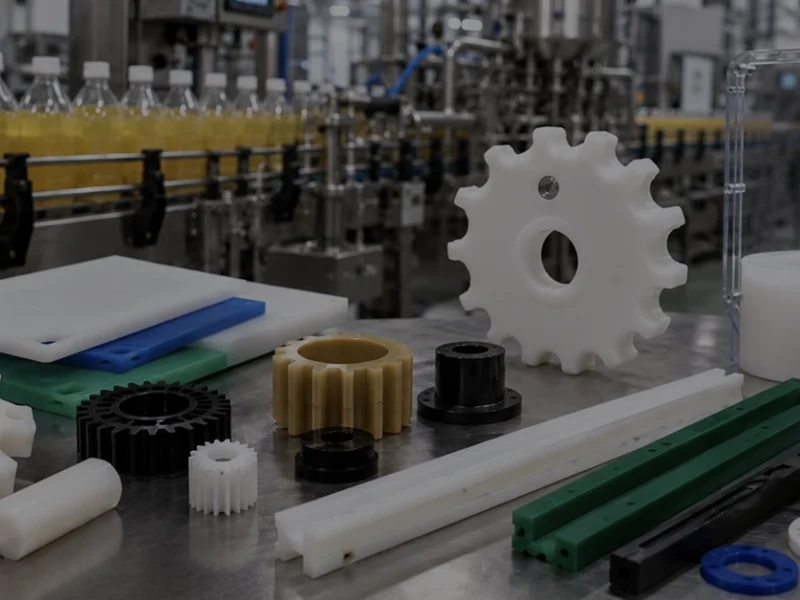
The food and beverage industry demands materials that are FDA-compliant, easy to sanitize, resistant to chemicals and moisture, and durable under constant use. Engineered plastics outperform traditional metals in many applications by reducing weight, eliminating corrosion, lowering noise, and decreasing maintenance.
Here are the top 10 engineered plastics most commonly used by Food & Beverage OEMs, along with their key properties, typical applications, and CNC machining considerations.
1. UHMW-PE (Ultra High Molecular Weight Polyethylene)
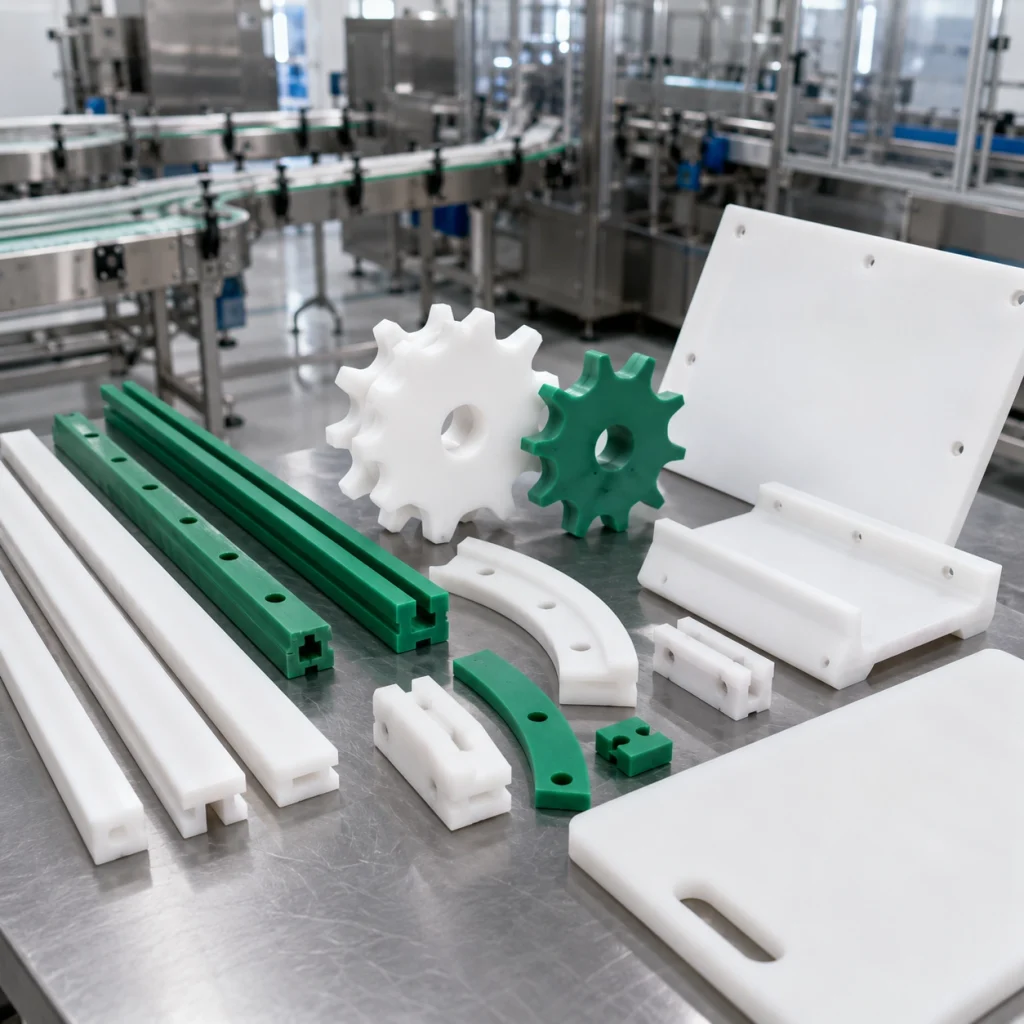
Key Properties: Exceptional wear and abrasion resistance, very low friction, high impact strength, excellent chemical resistance, FDA-compliant, self-lubricating. It performs well in wet environments.
Applications: Conveyor wear strips, guide rails, chain guides, chute liners, star wheels, cutting boards, scraper blades.
Machining Tips: Machines well but can be gummy. Use sharp tools and good chip evacuation. It is excellent for large parts. Avoid thin walls due to flexibility.
2. Acetal (POM / Delrin®)
Key Properties: High stiffness and strength, excellent dimensional stability, low moisture absorption, good wear resistance, low friction. FDA-compliant grades are available.
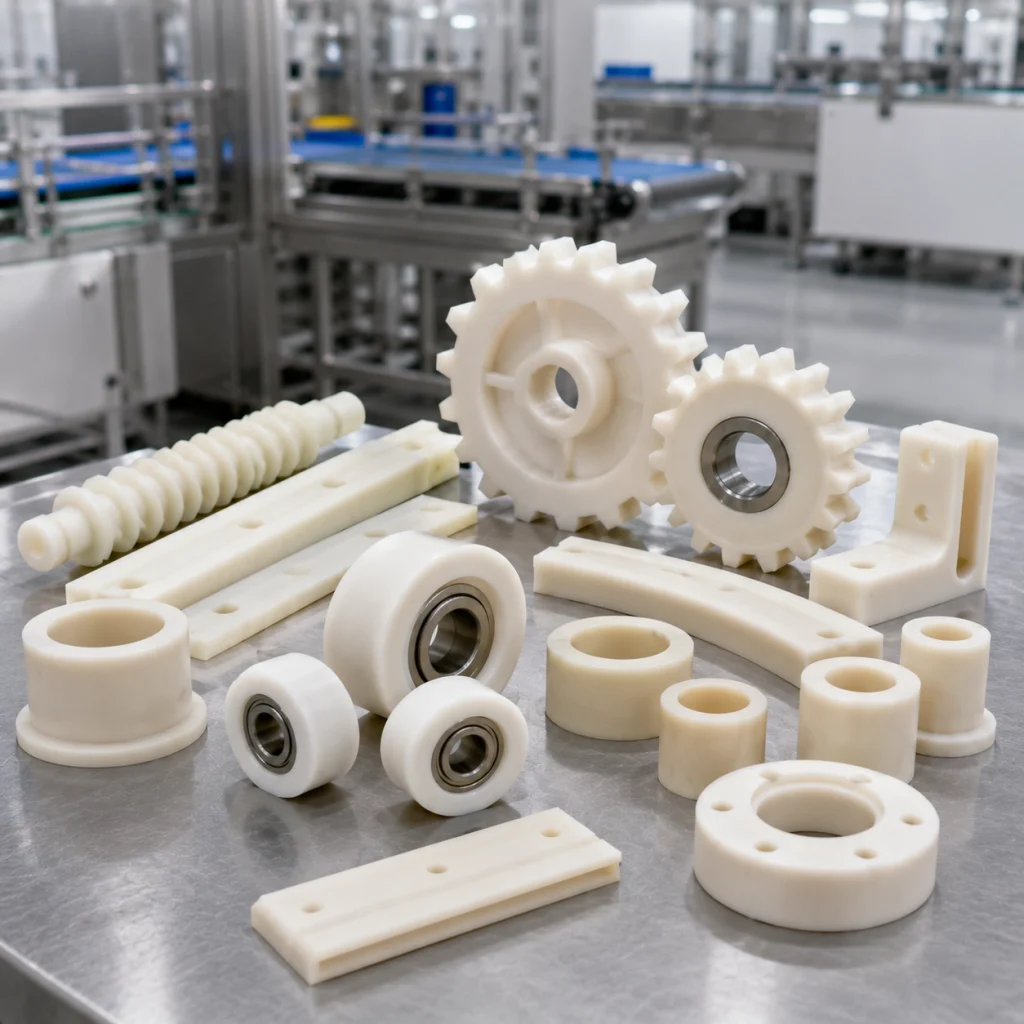
Applications: Gears, bearings, bushings, pump components, valve seats, filler nozzles, conveyor parts.
Machining Tips: One of the easiest plastics to machine. It produces excellent surface finishes and tight tolerances. It works well for precision parts.
3. Nylon (PA6, PA66, etc.)
Key Properties: High toughness, good wear resistance, high load-bearing capability. FDA grades are available (though it has higher moisture absorption than acetal).
Applications: Bushings, rollers, wear pads, sprockets, timing screws (in drier applications).
Machining Tips: Machines cleanly but absorbs moisture. Machine after conditioning or seal parts. It can be more challenging for very tight tolerances in humid environments.
4. PTFE (Teflon®)
Key Properties: Outstanding chemical resistance, extremely low friction (non-stick), wide temperature range, FDA-compliant.
Applications: Seals, gaskets, valve components, release surfaces, pump parts exposed to aggressive cleaners or ingredients.
Machining Tips: This is a soft material. It requires sharp tools and proper fixturing to avoid deformation. It performs well for turning but can be tricky for fine details.
5. Polypropylene (PP)
Key Properties: Excellent chemical resistance, lightweight, good fatigue resistance, FDA-compliant, cost-effective.
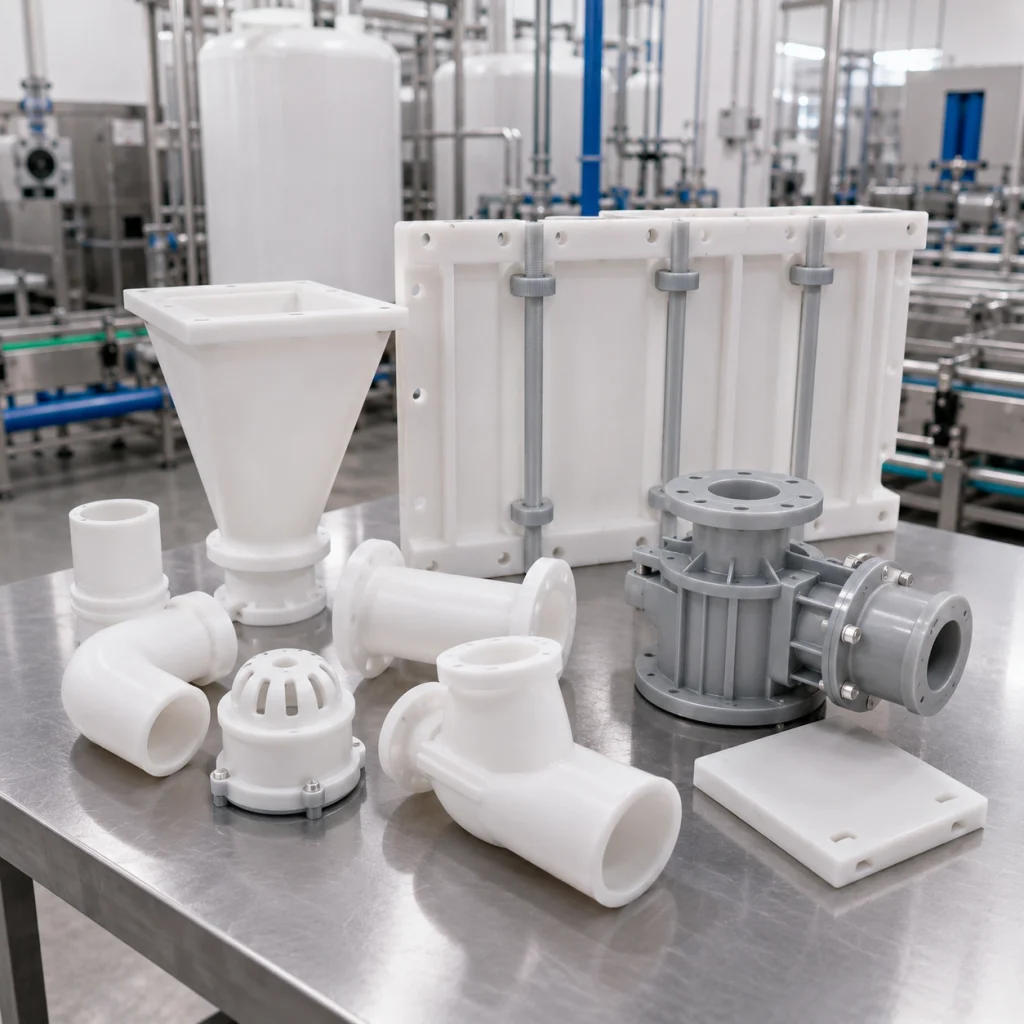
Applications: Tanks, hoppers, structural components, piping-related parts, wet processing equipment.
Machining Tips: Machines easily with standard tools. It is good for larger, less precision-oriented components.
6. HDPE (High-Density Polyethylene)
Key Properties: Good impact strength, moisture resistant, economical, FDA-compliant, easy to clean.
Applications: Cutting boards, tanks, pallets, non-critical wear surfaces, guards.
Machining Tips: Similar to UHMW but easier to machine. It produces nice chips and good finishes.
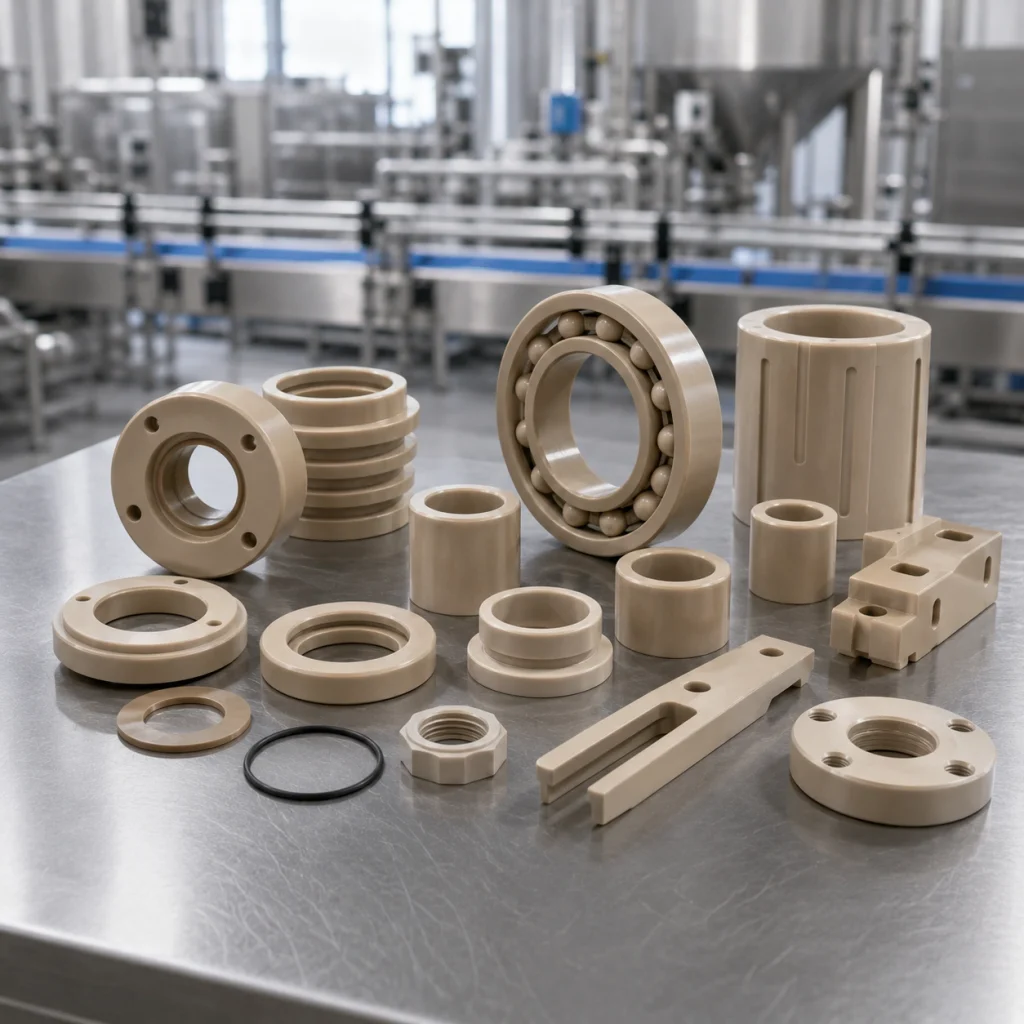
7. PEEK
Key Properties: High-temperature resistance, excellent mechanical strength, superior chemical resistance, very low smoke and toxicity, FDA-compliant.
Applications: High-heat components, valves, bearings in aggressive chemical or steam environments. Metal-detectable grades are available.
Machining Tips: Machines like a soft metal but requires rigid setups and proper speeds and feeds due to higher cost. It is excellent for precision work.
8. Polycarbonate (PC)
Key Properties: High impact strength, optical clarity (when needed), good dimensional stability. FDA grades are available.
Applications: Machine guards, sight glasses, protective covers, windows on processing equipment.
Machining Tips: Good machinability but can chip or crack if not properly supported. It polishes well for clear applications.
9. PET (Polyethylene Terephthalate)
Key Properties: High strength and stiffness, excellent wear resistance, low moisture absorption, good dimensional stability, FDA-compliant.
Applications: Sliding components, bearings, gears where acetal or nylon limitations exist.
Machining Tips: Machines very well with clean cuts and good tolerance control.
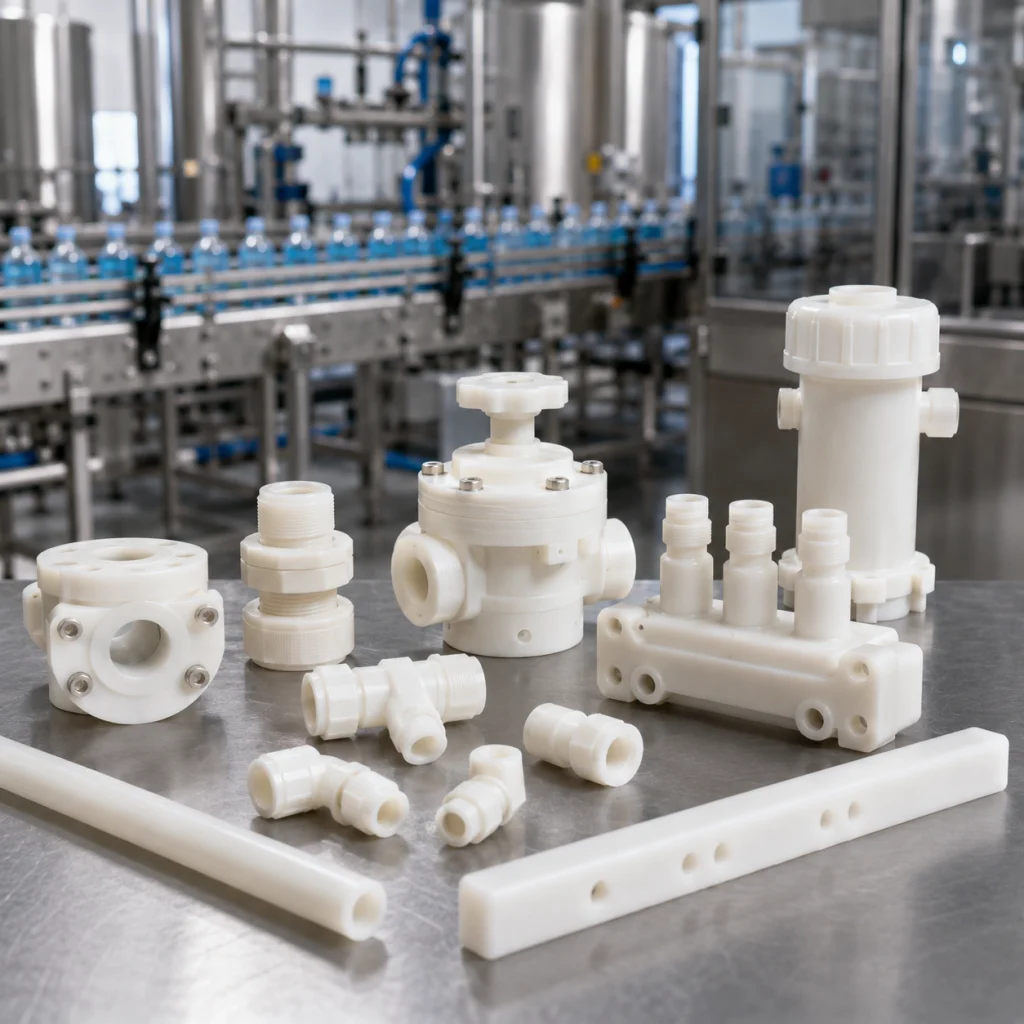
10. PVDF (Polyvinylidene Fluoride)
Key Properties: Outstanding chemical and temperature resistance, high purity, FDA-compliant, excellent UV stability.
Applications: High-purity fluid handling components, sensors, aggressive chemical processing lines in beverage manufacturing.
Machining Tips: Similar to other fluoropolymers. Use sharp tools and good cooling.
Comparison Table
| Rank | Material | Best For | Moisture Resistance | Wear Resistance | Cost |
|---|---|---|---|---|---|
| 1 | UHMW-PE | High-wear sliding | Excellent | Outstanding | Low |
| 2 | Acetal | Precision moving parts | Excellent | Excellent | Medium |
| 3 | Nylon | High-load applications | Fair | Excellent | Medium |
| 4 | PTFE | Non-stick and chemicals | Excellent | Good | High |
| 5 | Polypropylene | Chemical exposure | Excellent | Good | Low |
Why Partner with a Specialized Machine Shop Like Konrady Plastics?
Selecting the right material is only half the battle. Proper design for manufacturability, tight tolerances, and fast lead times are critical in the fast-paced food and beverage sector. At Konrady Plastics, we help OEMs choose the optimal material, machine complex components with CNC precision, and deliver with the speed your production schedules demand.
Ready to optimize your next food and beverage project? Contact us today for a free material consultation or quote. Our team can help you reduce downtime, meet FDA and NSF requirements, and improve equipment performance.
This post is for informational purposes. Always verify current FDA compliance for your specific application and consult material suppliers for the latest certifications.