

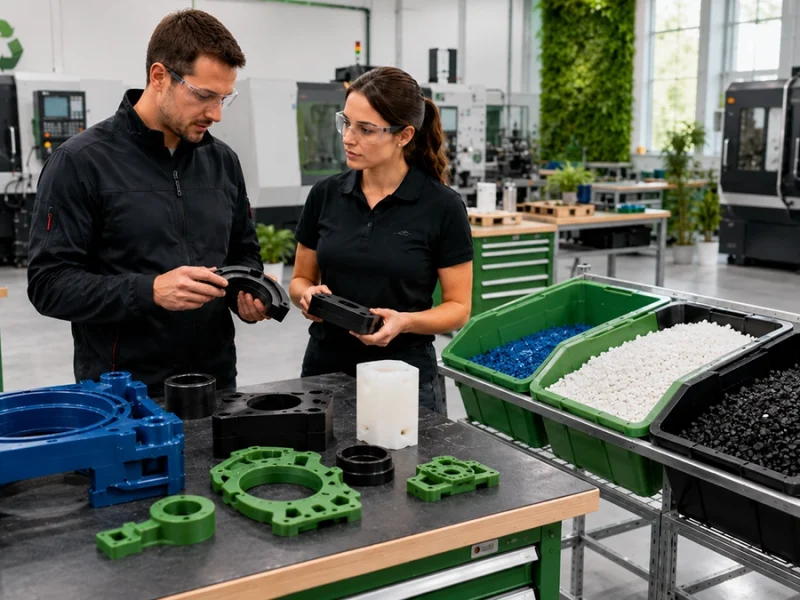
When sustainability comes up in conversations about plastics, the discussion often focuses on disposable products and packaging. But not all plastics are designed for the same purpose.
Engineered plastics, also known as performance plastics, are designed to perform for years in demanding industrial applications. They are used in manufacturing equipment, transportation systems, food processing machinery, heavy equipment, infrastructure, wastewater treatment and countless other environments where durability, reliability and efficiency matter.
When the right engineered plastic replaces or improves upon another material, it can contribute to sustainability in several ways, including longer component life, lower equipment weight, reduced maintenance, corrosion resistance, improved energy efficiency and more efficient use of materials.
These benefits can also help manufacturers, building owners, infrastructure developers and other organizations advance broader sustainability initiatives, including programs such as LEED, Green Globes, Envision, TRUE Zero Waste and ISO 14001.
At Konrady Plastics, we have worked with engineered plastics since 1981. Here are some of the ways the right material can help companies balance performance, efficiency and environmental responsibility.
Sustainability Starts With the Entire Life Cycle
Determining whether a material is a sustainable choice requires looking beyond what it is made from.
The U.S. Environmental Protection Agency’s Sustainable Materials Management approach encourages organizations to consider materials throughout their entire life cycle, including production, manufacturing, use, reuse and end-of-life management.
That perspective is particularly important with engineered plastics.
A component that lasts longer, reduces maintenance requirements, eliminates corrosion, minimizes lubrication or helps machinery operate more efficiently may deliver sustainability advantages during its service life that aren’t obvious when only looking at the raw material itself.
The better question isn’t simply: “Is this material sustainable?”
It is: “Which material delivers the required performance with the lowest practical environmental and resource impact throughout the life of the application?”
1. Longer Component Life Can Mean Fewer Resources Used
One of the most significant potential sustainability advantages of engineered plastics is durability.
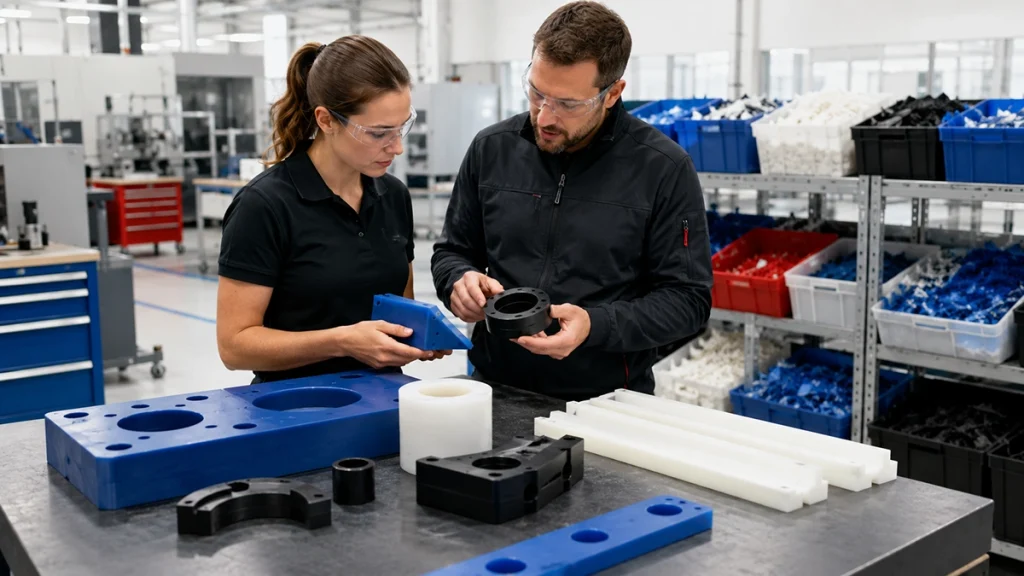
Materials such as UHMW, nylon, acetal, HDPE, PTFE, PVDF, PEEK and other engineered plastic materials can be selected for properties including:
• Wear resistance
• Corrosion resistance
• Chemical resistance
• Impact resistance
• Low friction
• Moisture resistance
• Dimensional stability
• Temperature resistance
In the right application, those characteristics can help components remain in service longer before they need to be repaired or replaced.
Every avoided replacement can also mean avoiding some combination of additional raw material, machining, transportation, packaging, installation and disposal.
That’s an important sustainability principle: sometimes the best way to reduce material consumption is simply to make the component last longer.
2. Lightweighting Can Reduce Energy Requirements
Engineered plastics can provide substantial weight savings compared with many traditional materials.
Lower component weight can make equipment easier to move, install and operate. In transportation applications, weight reduction can have an even greater effect because less energy is required to move a lighter vehicle.
The U.S. Department of Energy has identified lightweight materials as an important strategy for improving transportation efficiency.
Engineered polymers and polymer composites can therefore play an important role when designers need a combination of low weight and properties such as strength, chemical resistance, wear resistance or electrical insulation.
Konrady works with customers in the transportation industry on applications where characteristics such as lightweighting, durability and corrosion resistance can provide meaningful operational advantages.
3. Corrosion Resistance Can Extend Equipment Life
Corrosion can shorten equipment life and create an ongoing cycle of repair, replacement and maintenance.
Many engineered plastics naturally resist corrosion and can also be selected to withstand particular chemicals, moisture and harsh operating environments.
This can make them particularly useful in industries such as:
• Food and beverage processing
• Wastewater treatment
• Chemical processing
• Agriculture
• Material handling
• Heavy equipment
• Marine environments
• Infrastructure
Where an engineered plastic can provide a longer service life than a corrosion-prone alternative, manufacturers may be able to reduce the resources associated with repeated repairs and replacements.
For many organizations, durability is itself a sustainability strategy.
4. Low-Friction Materials Can Reduce Maintenance and Lubrication
Certain engineered plastics offer naturally low coefficients of friction or self-lubricating characteristics.
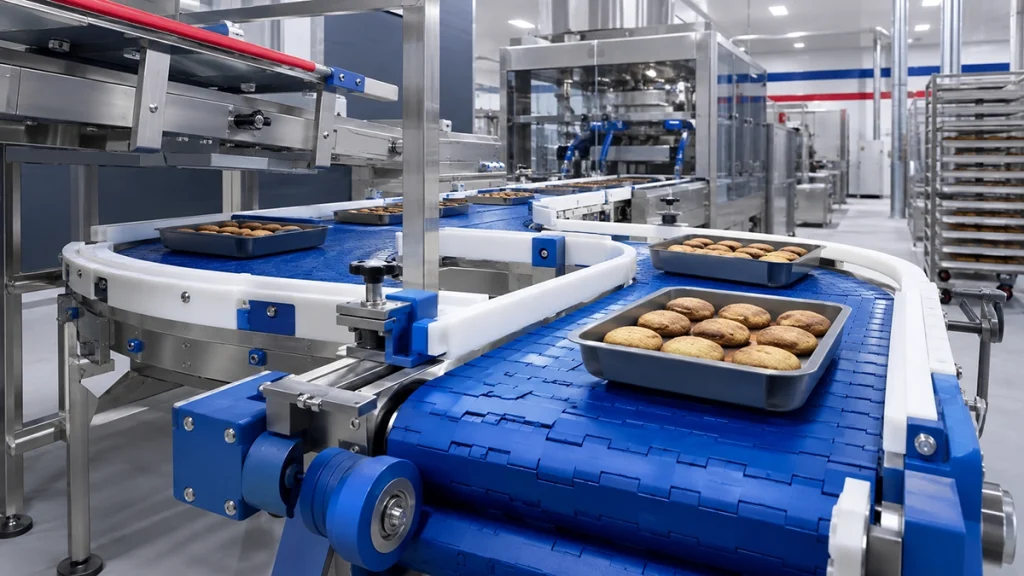
In applications such as bearings, bushings, guides, rollers, wear pads and wear strips, properly selected materials may reduce or eliminate the need for external lubrication.
That can be particularly beneficial in environments where contamination needs to be minimized or maintenance access is difficult.
Konrady supplies and machines engineered plastic components for heavy equipment and equipment manufacturers where low friction, wear resistance and corrosion resistance can help reduce maintenance and equipment downtime.
Longer maintenance intervals, less lubricant consumption and longer component life can all contribute to more efficient resource use.
5. Engineered Plastics Can Help Equipment Operate More Efficiently
Sustainability isn’t only about what happens when a component reaches the end of its life.
How efficiently equipment operates throughout its useful life matters too.
Engineered plastics are commonly used for components such as:
• Conveyor guides
• Wear strips
• Rollers
• Bearings and bushings
• Star wheels
• Gears and sprockets
• Scraper blades
• Machine guards
• Liners
• Seals
• Pulleys
• Transfer plates
Selecting materials with the appropriate friction, wear and dimensional characteristics can improve the performance of these components while helping reduce unplanned downtime and premature replacement.
Within food and beverage processing, for example, engineered plastics are used throughout production and conveying equipment where reliability, cleanability, wear resistance and low friction can be important.
Helping existing equipment perform reliably for longer can reduce the need for unnecessary repairs, replacement components and new equipment.
6. The Right Material Can Help Avoid Overengineering
More material isn’t automatically better.
A component should provide the properties required for its particular operating environment without being unnecessarily overengineered.
UHMW might be an excellent choice for one wear application, while nylon, acetal, PEEK, PTFE, PVDF or another material could be more appropriate elsewhere.
Important considerations can include:
• Operating temperature
• Mechanical load
• Friction
• Wear
• Chemical exposure
• Moisture
• Dimensional tolerances
• Food-contact requirements
• Electrical properties
• UV exposure
• Regulatory requirements
Choosing the appropriate material can help manufacturers optimize performance and service life while avoiding unnecessary use of resources.
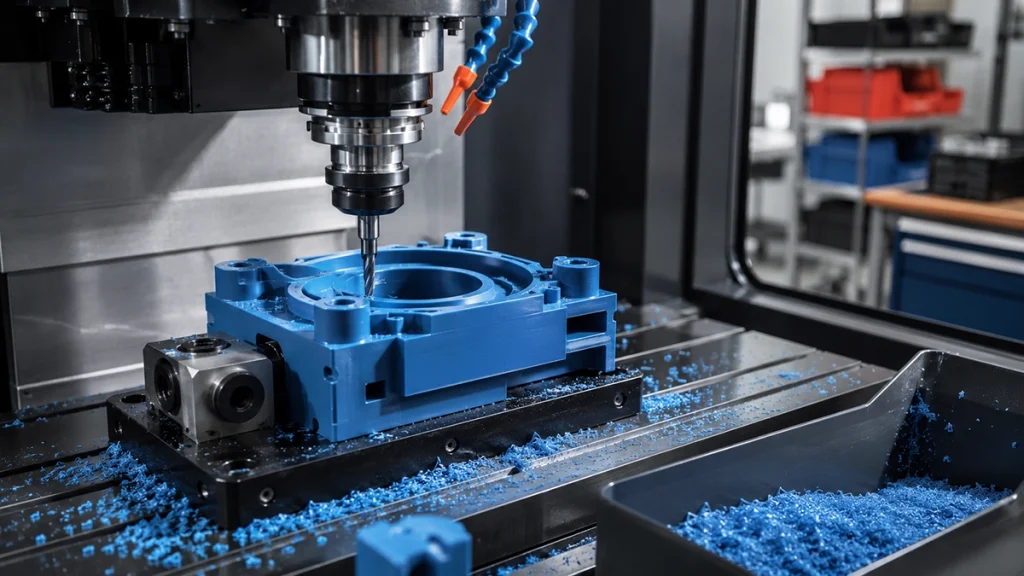
Konrady combines CNC plastic machining with an extensive inventory of engineered plastic sheet, rod and tube, helping customers evaluate both material and manufacturing considerations.
7. Engineered Plastics Can Support LEED and Other Sustainability Initiatives
Sustainability goals increasingly extend beyond an individual component.
Manufacturers, developers, infrastructure owners, architects, engineers and large OEMs may be working toward formal environmental certifications, corporate ESG goals, customer sustainability requirements or internal resource-efficiency targets.
Material selection can be one part of supporting those initiatives.
It’s important to make a distinction: an engineered plastic component does not automatically make a project “LEED certified” or qualify a company for another environmental certification. These programs evaluate multiple aspects of a building, project, facility or environmental management system.
However, appropriately selected materials may help organizations pursue strategies involving product longevity, resource efficiency, waste reduction, lifecycle impacts, responsible procurement and lower maintenance requirements.
LEED
LEED, administered by the U.S. Green Building Council, is one of the world’s best-known green building certification systems.
LEED evaluates buildings across multiple environmental and performance categories. Its current framework includes consideration of materials and resources, and LEED guidance for product manufacturers specifically points to areas such as product disclosure, environmental impacts, material ingredients and sourcing.
Engineered plastics used within qualifying building systems or components may be relevant when a project team is evaluating:
• Product life-cycle impacts
• Material durability and expected service life
• Responsible sourcing
• Environmental Product Declarations, when available from the material manufacturer
• Material ingredient documentation
• Circularity and waste-reduction strategies
• Maintenance and replacement requirements
For a LEED project, documentation requirements depend on the particular material, product, application and credit being pursued. Project teams should always confirm applicable requirements with their LEED professional.
Learn more: U.S. Green Building Council, LEED
https://www.usgbc.org/leed
Green Globes
Green Globes is another third-party building certification system used in the United States and Canada.
Its assessment covers areas including energy, water efficiency, materials, building systems, indoor environment and site considerations.
Green Globes for New Construction specifically incorporates life-cycle thinking and dedicates a portion of its assessment to materials. Depending on the application and documentation available, material choices may be evaluated within broader efforts related to lifecycle impacts, resource conservation and sustainable materials.
Durable engineered components that reduce maintenance, resist corrosion or extend service life can therefore complement a project’s larger resource-efficiency strategy.
Learn more: Green Building Initiative
https://thegbi.org/
Envision for Sustainable Infrastructure
For infrastructure projects, another important program is the Envision Sustainable Infrastructure Framework, managed by the Institute for Sustainable Infrastructure.
Envision was created specifically for civil infrastructure and evaluates sustainable, resilient and equitable infrastructure projects.
Its Resource Allocation category addresses the quantity, source and characteristics of materials, energy and water used by infrastructure projects.
That can make material decisions particularly important for applications involving:
• Water and wastewater infrastructure
• Transportation
• Utilities
• Energy infrastructure
• Public works
• Environmental systems
Engineered plastics’ corrosion resistance, long service life and ability to withstand harsh operating environments can make them worth considering when project teams are evaluating lifecycle performance and resource use.
Learn more: Institute for Sustainable Infrastructure
https://sustainableinfrastructure.org/
TRUE Zero Waste
Sustainability certifications aren’t limited to buildings.
The TRUE Zero Waste program, administered by Green Business Certification Inc., focuses specifically on waste reduction and resource efficiency at facilities.
TRUE helps organizations examine how materials flow through their operations and encourages waste prevention, reuse, recycling and resource efficiency.
For manufacturers, this reinforces an important point: sustainability doesn’t stop with material selection.
Efforts such as:
•Improving material yield
• Optimizing part nesting
• Separating recyclable material
• Reducing scrap
• Reusing appropriate materials
• Extending component life
• Reducing unnecessary replacement
• Working with recycling partners
can all be part of a larger resource-management strategy.
Learn more: TRUE Zero Waste
https://www.gbci.org/about-true
ISO 14001
Many manufacturers and industrial organizations are also familiar with ISO 14001, the internationally recognized standard for environmental management systems.
ISO 14001 provides a framework for organizations to manage environmental impacts and continually improve environmental performance.
The current ISO 14001:2026 framework addresses areas such as resource use, waste management, environmental objectives and ongoing performance improvement.
For an organization operating under an ISO 14001 environmental management system, selecting longer-lasting materials, reducing waste, improving resource efficiency and evaluating lifecycle impacts can support its broader environmental objectives.
Again, purchasing an engineered plastic component does not create ISO 14001 compliance on its own. Instead, thoughtful material selection can become one of many actions an organization takes as part of a structured environmental management program.
Learn more: International Organization for Standardization
https://www.iso.org/standard/14001
8. Better Material Documentation Is Becoming More Important
There’s another trend manufacturers should pay attention to: customers increasingly want to know more about the materials going into their products and equipment.
Depending on the industry and project, procurement teams may request information relating to:
• Material composition
• Country or source of manufacture
• Recycled content
• Recyclability
• Environmental Product Declarations (EPDs)
• Life Cycle Assessments (LCAs)
• Material safety documentation
• Regulatory compliance
• Food-contact compliance
• RoHS or REACH compliance
• Supplier environmental programs
• Waste-management practices
• Expected product lifespan
Not every engineered plastic will have all of this documentation, and availability varies considerably by material and manufacturer.
However, this is another reason material selection should happen early in the design process whenever sustainability certifications or environmental reporting requirements are important.
Konrady can work with customers to identify the material specifications needed for an application and, when available, help connect customers with relevant technical documentation from material manufacturers.
9. Machining Plastics Creates Opportunities for Better Material Management
Manufacturing itself is another part of the sustainability equation.
Machining creates offcuts, chips and excess material whether a component is made from plastic, metal or another material.
Improving nesting, selecting appropriately sized stock and carefully planning machining operations can help manufacturers use raw materials more efficiently.
Where appropriate recycling streams exist, certain thermoplastic manufacturing scrap can also be collected and recycled rather than being treated as general waste.
At Konrady Plastics, material efficiency is part of a larger commitment to reducing waste. Approximately 78% of plastic drops are recycled, keeping usable thermoplastic material in productive recycling streams rather than sending it directly to disposal.
The goal should go beyond simply asking:
“Can this material be recycled?”
A more complete sustainability conversation asks:
“Can we use the right amount of material, make the component last longer, operate equipment more efficiently and responsibly manage the material that remains?”
Performance and Sustainability Don’t Have to Be Opposites
The sustainability discussion around plastics is complex, and it should be.
Engineered plastics have environmental impacts, just as metals, glass, ceramics and other industrial materials do.
What matters is understanding the entire application.
A performance plastic component designed to operate inside a machine for many years is fundamentally different from a disposable plastic product intended to be used for minutes.
For a piece of industrial equipment expected to operate for years or decades, a durable engineered plastic component that:
• Reduces weight
• Resists corrosion
• Reduces friction
• Requires less lubrication
• Extends maintenance intervals
• Prevents premature component failure
• Improves equipment efficiency
• Reduces replacement frequency
can create sustainability benefits that extend well beyond the material itself.
And for companies pursuing sustainability programs such as LEED, Green Globes, Envision, TRUE Zero Waste or ISO 14001, those lifecycle considerations can become part of a much larger environmental strategy.
Build for Longer. Waste Less. Perform Better.
At Konrady Plastics, sustainability starts with helping customers choose materials that perform.
For more than 40 years, we have combined an in-house CNC plastic machine shop with a full-line inventory of engineered plastic sheet, rod and tube.
Our team works with manufacturers and engineers to evaluate materials based on the conditions that actually matter: load, wear, friction, temperature, chemicals, moisture, regulatory requirements, expected service life and more.
Whether you’re trying to extend component life, reduce equipment weight, improve wear resistance, eliminate corrosion, support a sustainability initiative or replace an existing component with a better-performing material, we’re here to help.
Contact our team to discuss your next application.